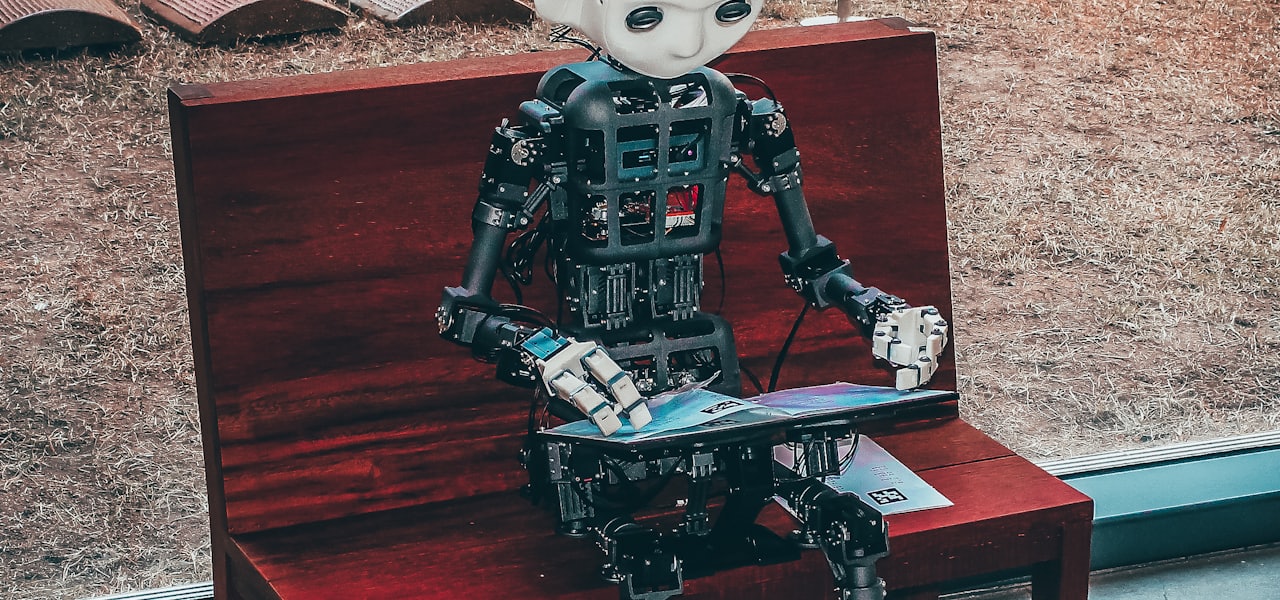
A chatbot is a software application or web interface that is designed to mimic human conversation through text or voice interactions. Modern chatbots are typically online and use generative artificial intelligence systems that are capable of maintaining a conversation with a user in natural language and simulating the way a human would behave as a conversational partner. Such chatbots often use large language models (LLMs) and natural language processing, but simpler chatbots have existed for decades. == LLM chatbots == == General chatbots == == Historical chatbots ==
Deep Zoom
Deep Zoom is a technology developed by Microsoft for efficiently transmitting and viewing images. It allows users to pan around and zoom in on a large, high resolution image or a large collection of images. It reduces the time required for initial load by downloading only the region being viewed or only at the resolution it is displayed at. Subsequent regions are downloaded as the user pans to (or zooms into) them; animations are used to hide any jerkiness in the transition. The libraries are also available in other platforms including Java and Flash. == History == The Deep Zoom file format is very similar to the Google Maps image format where images are broken into tiles and then displayed as required. The tiling typically follows a quadtree pattern of increasing resolution of image (in other words twice the zoom and twice the resolution). The main difference is that with Google Maps the actual details on the image change from one zoom level to another, while with Deep Zoom the same image is displayed at each zoom level. Seadragon Software, formerly Sand Codex, first created the Seadragon technology and its implementation of what is now called Deep Zoom. This technology was then absorbed into the Microsoft Live Labs when Seadragon Software was acquired. Engineers from Seadragon now work with Microsoft to integrate their work into technology such as Silverlight and Photosynth. == Deep Zoom examples == The most famous implementation of Deep Zoom was probably the first: the memorabilia collection at the Hard Rock website. Conceived and designed by Duncan/Channon and built by Vertigo, it was demonstrated for the first time in March 2008 at the Microsoft MIX convention in Las Vegas. In 2010, Microsoft Live Labs partnered with the University of California, Berkeley to create ChronoZoom, a DeepZoom-powered time visualization tool that pushed the limits of DeepZoom, since it required zooming from the scale of 13 billion years down to a single day. The project has since graduated to development under Microsoft Research. Another example is the Deep Earth project. It is described by its creators as "a community project focused on creating a rich interactive mapping control using Silverlight2 Deep Zoom. Concentrating on Microsoft Virtual Earth imagery and data the project offers team members the opportunity to learn and share while creating something cool and useful." A paintings collection project http://galleryzoom.co.uk/ shows 1000 high resolution/sensor images individually indexed. (Using Deep Zoom Composer). Blaise Aguera y Arcas gave a demonstration of Seadragon and Photosynth at the 2007 TED conference. In November 2009, 352 Media Group, a Silverlight developer in the Microsoft Silverlight Partner Program, created an example of Deep Zoom using Microsoft Silverlight version 3. It is online at 352 Media Group's Web site. The Winston Churchill Deep Zoom Archived 2010-07-04 at the Wayback Machine mosaic, created by Silverlight developers Shoothill, features as both an online interactive deep zoom and a standalone deep zoom which forms part of the Churchill exhibit in the Churchill War Rooms in Whitehall. In 2010, Shoothill built the Sumatran Tiger Deep Zoom - the largest seen to date - for worldwide conservation charity Fauna and Flora International, featuring thousands of images of endangered species. An early example of Deep Zoom-like technology was implemented at The Department of Maori Affairs in New Zealand in 1997. The technology was used to display Maori land ownership. == Deep Zoom images == The file format used by Deep Zoom (as well as Photosynth and Seadragon Ajax) is XML based. Users can specify a single large image (dzi) or a collection of images (dzc). It also allows for "Sparse Images"; where some parts of the image have greater resolution than others, an example of which can be found on the Seadragon Ajax home page; The bike image displayed is a sparse image. Though used in the proprietary Deep Zoom, the dzi format is open and able to be used by anyone. === Deep Zoom image (dzi) === A DZI has two parts: a DZI file (with either a .dzi or .xml extension) and a subdirectory of image folders. Each folder in the image subdirectory is labeled with its level of resolution. Higher numbers correspond to a higher resolution level; inside each folder are the image tiles corresponding to that level of resolution, numbered consecutively in columns from top left to bottom right. === Deep Zoom collection (dzc) === A DZC is a collection of some number of DZIs linked and referenced by a DZC file (with either a .dzc or .xml extension). At a high level, a collection is a number of image thumbnails whose location is kept track of by the .dzc/.xml file, when zooming into an image, it accesses greater resolutions tiles. A DZC's structure is similar to that of a DZI; the .dzc/.xml file defines the collection and the subdirectory of folders maps to the DZI file structure, each with their set of .dzi/.xml and image tiles. The DZC is used in Microsoft's Pivot, but not in SeaDragon per se. === Sparse Images === Sparse images are a sub-classification of the DZI file type. A sparse image is normally a number of separate photographs with varying resolution levels that have been placed in a single DZI instead of a DZC. Sparse images have no different file structure than that of a DZI and differ only in that there is not a single "highest resolution" level for the entire DZI. == Software that uses Deep Zoom == Image Composite Editor - image stitching tool created by Microsoft Research Deep Zoom Composer - collage maker and simple panorama tool created by Microsoft. Images' resolution is maintained when exporting for web use (via Silverlight Deep Zoom or JavaScript using a third-party template). No longer available for download from Microsoft though it can be found on various other sources such as Internet Archive. == iPhone OS development == Microsoft Live Labs has created an application for the App Store called Seadragon Mobile. It is run over the internet and includes Deep Zoom on the following categories; art, history, maps, photos, Photosynth which anybody can upload to, space and technology & web.
Word error rate
Word error rate (WER) is a common metric of the performance of a speech recognition or machine translation system. The WER metric typically ranges from 0 to 1, where 0 indicates that the compared pieces of text are exactly identical, and 1 (or larger) indicates that they are completely different with no similarity. This way, a WER of 0.8 means that there is an 80% error rate for compared sentences. The general difficulty of measuring performance lies in the fact that the recognized word sequence can have a different length from the reference word sequence (supposedly the correct one). The WER is derived from the Levenshtein distance, working at the word level instead of the phoneme level. The WER is a valuable tool for comparing different systems as well as for evaluating improvements within one system. This kind of measurement, however, provides no details on the nature of translation errors and further work is therefore required to identify the main source(s) of error and to focus any research effort. This problem is solved by first aligning the recognized word sequence with the reference (spoken) word sequence using dynamic string alignment. Examination of this issue is seen through a theory called the power law that states the correlation between perplexity and word error rate. Word error rate can then be computed as: W E R = S + D + I N = S + D + I S + D + C {\displaystyle {\mathit {WER}}={\frac {S+D+I}{N}}={\frac {S+D+I}{S+D+C}}} where S is the number of substitutions, D is the number of deletions, I is the number of insertions, C is the number of correct words, N is the number of words in the reference (N=S+D+C) The intuition behind 'deletion' and 'insertion' is how to get from the reference to the hypothesis. So if we have the reference "This is wikipedia" and hypothesis "This _ wikipedia", we call it a deletion. Note that since N is the number of words in the reference, the word error rate can be larger than 1.0, namely if the number of insertions I is larger than the number of correct words C. When reporting the performance of a speech recognition system, sometimes word accuracy (WAcc) is used instead: W A c c = 1 − W E R = N − S − D − I N = C − I N {\displaystyle {\mathit {WAcc}}=1-{\mathit {WER}}={\frac {N-S-D-I}{N}}={\frac {C-I}{N}}} Since the WER can be larger than 1.0, the word accuracy can be smaller than 0.0. == Experiments == It is commonly believed that a lower word error rate shows superior accuracy in recognition of speech, compared with a higher word error rate. However, at least one study has shown that this may not be true. In a Microsoft Research experiment, it was shown that, if people were trained under "that matches the optimization objective for understanding", (Wang, Acero and Chelba, 2003) they would show a higher accuracy in understanding of language than other people who demonstrated a lower word error rate, showing that true understanding of spoken language relies on more than just high word recognition accuracy. == Other metrics == One problem with using a generic formula such as the one above, however, is that no account is taken of the effect that different types of error may have on the likelihood of successful outcome, e.g. some errors may be more disruptive than others and some may be corrected more easily than others. These factors are likely to be specific to the syntax being tested. A further problem is that, even with the best alignment, the formula cannot distinguish a substitution error from a combined deletion plus insertion error. Hunt (1990) has proposed the use of a weighted measure of performance accuracy where errors of substitution are weighted at unity but errors of deletion and insertion are both weighted only at 0.5, thus: W E R = S + 0.5 D + 0.5 I N {\displaystyle {\mathit {WER}}={\frac {S+0.5D+0.5I}{N}}} There is some debate, however, as to whether Hunt's formula may properly be used to assess the performance of a single system, as it was developed as a means of comparing more fairly competing candidate systems. A further complication is added by whether a given syntax allows for error correction and, if it does, how easy that process is for the user. There is thus some merit to the argument that performance metrics should be developed to suit the particular system being measured. Whichever metric is used, however, one major theoretical problem in assessing the performance of a system is deciding whether a word has been “mis-pronounced,” i.e. does the fault lie with the user or with the recogniser. This may be particularly relevant in a system which is designed to cope with non-native speakers of a given language or with strong regional accents. The pace at which words should be spoken during the measurement process is also a source of variability between subjects, as is the need for subjects to rest or take a breath. All such factors may need to be controlled in some way. For text dictation it is generally agreed that performance accuracy at a rate below 95% is not acceptable, but this again may be syntax and/or domain specific, e.g. whether there is time pressure on users to complete the task, whether there are alternative methods of completion, and so on. The term "Single Word Error Rate" is sometimes referred to as the percentage of incorrect recognitions for each different word in the system vocabulary. == Edit distance == The word error rate may also be referred to as the length normalized edit distance. The normalized edit distance between X and Y, d( X, Y ) is defined as the minimum of W( P ) / L ( P ), where P is an editing path between X and Y, W ( P ) is the sum of the weights of the elementary edit operations of P, and L(P) is the number of these operations (length of P).
PhotoLine
PhotoLine is a general purpose bitmap and vector graphics editor developed and published by Computerinsel GmbH for Windows, macOS, and Linux/Wine. It was originally created in 1995 by Gerhard Huber and Martin Huber. The program combines bitmap and vector graphics editing in one seamless working application unlike most graphics software which tend to focus on either bitmap or vector editing and output. PhotoLine is considered as a market competitor to Adobe Photoshop. == Features == PhotoLine edits and composes multi-layer raster and vector images with deep support for masking and alpha compositing and with full color management. Editing and color management in PhotoLine is mostly non-destructive. Image data in layers is preserved without loss of information regardless of the document's image mode or layer transformation. color depth, image resolution, color model, and ICC profile are preserved for each individual layer or group of layers. Layers can be cloned and reused anywhere in the layer stack, including repurposed as layer masks. Layer blending and compositing in PhotoLine supports common blend modes, and features a layer blend range of -200 to +200 percent. It is also possible to control which channels are blended for each layer, adjustment layer, and layer mask or group of layers. Filters, adjustment layers, and brushes have access to Lab and HIS color modes (HIS is a variant of HSL), separately of the color model of the underlying image layer. In Addition to raster and vector editing, PhotoLine can be used for small desktop publishing projects. Multi-page documents with page spreads and text flow between text frames and pages are supported. Character and paragraph styles can be defined. Spot colors, bleed settings, a baseline grid, a table of contents generator, and PDF/X support help with these projects. PhotoLine is however much more limited when compared to dedicated publishing software such as Adobe InDesign or QuarkXPress. PhotoLine incorporates the Open-source software library LibRaw to read raw images from digital cameras for import. Developing these files is non-destructive with a choice of embedding the RAW image data either in the PhotoLine document or link to the external RAW image file. PhotoLine can open raw files as linear unmodified and non color managed source images. Photoshop PSD files can be imported and exported. Core functionality of PhotoLine can be extended through standard Photoshop filter plugins, the G'MIC digital image processing framework, and PSP tubes. External programs can be linked for a seamless round-trip workflow and files can be sent directly for processing in third-party design applications. Custom functionality is further supported through scripting and macro recording. == Early history == Developed by two brothers, Gerhard Huber and Martin Huber, PhotoLine was first released in January 1996 on the Atari ST line of personal computers from Atari Corporation. Previously, Gerhard and Martin had worked on making graphics cards for Atari computers and writing drivers for image scanners. Atari's market share was declining, and the brothers considered developing a video game to expand the business. This led them to search for image editing software that would run on Atari computers and fit their game project. Only an image editor called tms Cranach came close to what Gerhard and Martin had in mind. tms Cranach was a Raster graphics editor running on Atari's MegaST/STe, TT030, and Falcon030 systems. However, Cranach turned out to be expensive software and complicated to use. The brothers contacted tms (Cranach's developers) and this resulted in an offer from tms to purchase Cranach and its source code, as tms intended to exit the Atari software market. After the purchase of Cranach and its source code Gerhard and Martin initially continued to sell Cranach, but sales were low. In 1995 the two decided to start developing a new graphics editor called "PhotoLine". PhotoLine was developed from scratch and written in C++. It nevertheless contained a lot of know-how from Cranach (which was written in C). PhotoLine first release was launched one year later in 1996. With the growing popularity of Microsoft Windows, the release of Windows 95, and the limiting graphics hardware on the Atari platforms, the developers switched development platforms and continued development of PhotoLine for Windows only. The first Windows version (PhotoLine 2.2) was released in the middle of 1997. Shortly after, the Atari version was discontinued and saw its final release as PhotoLine 2.30. The Huber brothers released this final Atari version into the public domain in 2012. The first Classic Mac OS version of PhotoLine 6 appeared in 1999 after many ex-Atari users who had switched to Mac OS pressured the PhotoLine developers to release an Apple port. == Linux Support == PhotoLine runs natively under Windows and MacOS. While a native Linux version of PhotoLine is not available, running PhotoLine under Wine is actively supported and maintained by the developers. Running PhotoLine under Linux/Wine PhotoLine enables the user to allow Little CMS to fully support color management under Linux instead of the native OS CMS. == File format == Native PhotoLine files have the extension .PLD, which is an abbreviation of "PhotoLine Document". It can contain embedded JPEG, PNG, or camera raw images. It contains a preview image in JPEG or PNG format, which is used by the operating system or third-party applications to display a thumbnail of its contents. Thumbnails are natively supported on MacOS X. During installation on Windows the user is presented with an option to install a PLD thumbnail preview driver which enables thumbnails of PLD content in Windows Explorer. Alternatively, the FastPictureViewer Standalone Codec Pack provides the ability to display PLD thumbnails in Windows Explorer. == Version History == PhotoLine was first developed for the Atari ST computer. Version 2 was the first version for Windows, and since version 6 PhotoLine is also available for MacOS.
COVID-19 apps
COVID-19 apps include mobile-software applications for digital contact-tracing—i.e. the process of identifying persons ("contacts") who may have been in contact with an infected individual—deployed during the COVID-19 pandemic. Numerous tracing applications have been developed or proposed, with official government support in some territories and jurisdictions. Several frameworks for building contact-tracing apps have been developed. Privacy concerns have been raised, especially about systems that are based on tracking the geographical location of app users. Less overtly intrusive alternatives include the co-option of Bluetooth signals to log a user's proximity to other cellphones. (Bluetooth technology has form in tracking cell-phones' locations.)) On 10 April 2020, Google and Apple jointly announced that they would integrate functionality to support such Bluetooth-based apps directly into their Android and iOS operating systems. India's COVID-19 tracking app Aarogya Setu became the world's fastest growing application—beating Pokémon Go—with 50 million users in the first 13 days of its release. == Rationale == Contact tracing is an important tool in infectious disease control, but as the number of cases rises time constraints make it more challenging to effectively control transmission. Digital contact tracing, especially if widely deployed, may be more effective than traditional methods of contact tracing. In a March 2020 model by the University of Oxford Big Data Institute's Christophe Fraser's team, a coronavirus outbreak in a city of one million people is halted if 80% of all smartphone users take part in a tracking system; in the model, the elderly are still expected to self-isolate en masse, but individuals who are neither symptomatic nor elderly are exempt from isolation unless they receive an alert that they are at risk of carrying the disease. Some proponents advocate for legislation exempting certain COVID-19 apps from general privacy restrictions. == Issues == === Uptake === Ross Anderson, professor of security engineering at Cambridge University, listed a number of potential practical problems with app-based systems, including false positives and the potential lack of effectiveness if takeup of the app is limited to only a small fraction of the population. In Singapore, only one person in three had downloaded the TraceTogether app by the end of June 2020, despite legal requirements for most workers; the app was also underused, as it required users to keep it open at all times on iOS. A team at the University of Oxford simulated the effect of a contact tracing app on a city of 1 million. They estimated that if the app was used in conjunction with the shielding of over-70s, then 56% of the population would have to be using the app for it to suppress the virus. This would be equivalent to 80% of smartphone users in the United Kingdom. They found that the app could still slow the spread of the virus if fewer people downloaded it, with one infection being prevented for every one or two users. In August 2020, the American Civil Liberties Union (ACLU) argued that there were disparities in smartphone use between demographics and minority groups, and that "even the most comprehensive, all-seeing contact tracing system is of little use without social and medical systems in place to help those who may have the virus — including access to medical care, testing, and support for those who are quarantined." === App store restrictions === Addressing concerns about the spread of misleading or harmful apps, Apple, Google and Amazon set limits on which types of organizations could add coronavirus-related apps to its App Store, limiting them to only "official" or otherwise reputable organizations. === Ethical principles of mass surveillance using COVID-19 contact tracing apps === The advent of COVID-19 contact tracing apps has led to concerns around privacy, the rights of app users, and governmental authority. The European Convention on Human Rights, the International Covenant on Civil and Political Rights (ICCPR) and the United Nations and the Siracusa Principles have outlined 4 principles to consider when looking at the ethical principles of mass surveillance with COVID-19 contact tracing apps. These are necessity, proportionality, scientific validity, and time boundedness. Necessity is defined as the idea that governments should only interfere with a person's rights when deemed essential for public health interests. The potential risks associated with infringements of personal privacy must be outweighed by the possibility of reducing significant harm to others. Potential benefits of contact-tracing apps that may be considered include allowing for blanket population-level quarantine measures to be lifted sooner and the minimization of people under quarantine. Hence, some contend that contact-tracing apps are justified as they may be less intrusive than blanket quarantine measures. Furthermore, the delay of an effective contact-tracing app with significant health and economic benefits may be considered unethical. Proportionality refers to the concept that a contact tracing app's potential negative impact on a person's rights should be justifiable by the severity of the health risks that are being addressed. Apps must use the most privacy-preserving options available to achieve their goals, and the selected option should not only be a logical option for achieving the goal but also an effective one. Scientific validity evaluates whether an app is effective, timely and accurate. Traditional manual contact-tracing procedures are not efficient enough for the COVID-19 pandemic, and do not consider asymptomatic transmission. Contact-tracing apps, on the other hand, can be effective COVID-19 contact-tracing tools that reduce R value to less than 1, leading to sustained epidemic suppression. However, for apps to be effective, there needs to be a minimum 56-60% uptake in the population. Apps should be continually modified to reflect current knowledge on the diseases being monitored. Some argue that contact-tracing apps should be considered societal experimental trials where results and adverse effects are evaluated according to the stringent guidelines of social experiments. Analyses should be conducted by independent research bodies and published for wide dissemination. Despite the current urgency of our pandemic situation, we should still adhere to the standard rigors of scientific evaluation. Time boundedness describe the need for establishing legal and technical sunset clauses so that they are only allowed to operate as long as necessary to address the pandemic situation. Apps should be withdrawn as soon as possible after the end of the pandemic. If the end of the pandemic cannot be predicted, the use of apps should be regularly reviewed and decisions about continued use should be made at each review. Collected data should only be retained by public health authorities for research purposes with clear stipulations on how long the data will be held for and who will be responsible for security, oversight, and ownership. === Privacy, discrimination and marginalisation concerns === The American Civil Liberties Union (ACLU) has published a set of principles for technology-assisted contact tracing and Amnesty International and over 100 other organizations issued a statement calling for limits on this kind of surveillance. The organisations declared eight conditions on governmental projects: surveillance would have to be "lawful, necessary and proportionate"; extensions of monitoring and surveillance would have to have sunset clauses; the use of data would have to be limited to COVID-19 purposes; data security and anonymity would have to be protected and shown to be protected based on evidence; digital surveillance would have to address the risk of exacerbating discrimination and marginalisation; any sharing of data with third parties would have to be defined in law; there would have to be safeguards against abuse and the rights of citizens to respond to abuses; "meaningful participation" by all "relevant stakeholders" would be required, including that of public health experts and marginalised groups. The German Chaos Computer Club (CCC) and Reporters Without Borders also issued checklists. The Exposure Notification service intends to address the problem of persistent surveillance by removing the tracing mechanism from their device operating systems once it is no longer needed. On 20 April 2020, it was reported that over 300 academics had signed a statement favouring decentralised proximity tracing applications over centralised models, given the difficulty in precluding centralised options being used "to enable unwarranted discrimination and surveillance." In a centralised model, a central database records the ID codes of meetings between users. In a decentralised model, this information is recorded on individual phones, with the role of the central
Pocketbook (application)
Pocketbook was a Sydney-based free budget planner and personal finance app launched in 2012. The app helped users setup and manage budgets, track spending and manage bills. As of 2016 Pocketbook claimed to support over 250,000 Australians, in January 2018 that number was 435,000. After being acquired by Zip Co Ltd in 2016, it was announced in 2022 that the app was to be shut down and all user accounts deleted. == History == Pocketbook was founded by Alvin Singh and Bosco Tan in 2012. It was conceived in 2011 in a Wolli Creek apartment as a tool for Alvin and Bosco to take control of their money. In 2013, Pocketbook raised $500,000 from technology fund Tank Stream Ventures, and a group of investors including TV personality David Koch, Geoff Levy, David Shein and Peter Cooper. In September 2016 Digital retail finance and payment industry player zipMoney (now trading as Zip Co Limited) acquired Pocketbook in a $7.5m deal == Features == The app synced with the bank account of users and would organize spending into different categories. Users could also be reminded of bill payments, analyse spending and set spending limits. They can also be alerted of fraudulent transactions and deductions. The app employs security measures like end to end encryption, CloudFlare protection, fraud detection, identity protection etc. Pocketbook was available via web and mobile version. == Awards == Personal Finance Innovator of the Year by Fintech Business Awards 2017 Innovator of the Year by OPTUS MyBusiness Awards 2017 Best Finance App of 2016 by Australian Fintech Best Personal Finance App: Pocketbook won the 2016 Finder Innovation Awards, presented at a gala dinner hosted by media personality and The New Inventors presenter James O'Loghlin. Best Mobile App of the Year Winner: StartCon hosted the first annual Australasian Startup Awards. Over 200 nominations in 14 categories and an overall winner were reviewed, and winners were determined by public voting, with over 63,000 votes in total. Best New Startup 2014 by StartupSmart. Finalist in the SWIFT Innotribe startup competition in Dubai in 2013.
Fyuse
Fyuse is a spatial photography app which lets users capture and share interactive 3D images. By tilting or swiping one's smartphone, one can view such "fyuses" from various angles — as if one were walking around an object or subject. The app blends photography and video to create an interactive medium and was first published for iOS in April 2014. The Android version was released at the end of 2014. == The app == Fyuse lets users capture panoramas, selfies, and full 360° views of objects and allows one to view captured moments from different angles. It has its own personal gallery, social network and standalone web integration. With the app, Fyusion also created a social networking platform similar to Instagram. Fyuses can be shared, commented on, liked and re-shared to one's followers (called Echoes). One can build a network of followers and with engagement tracking, one can see how many times an image has been interacted with The images can also be saved for private, offline view, or shared to other social networks, like Facebook or Twitter, or embedded on a website where the images can be interacted with by desktop users via dragging the mouse. Furthermore, in the compass tab other fyuses can be discovered using the app's system of tags and categories. One's Fyuse feed is prepopulated with top users, and one can follow people to see when they post a new fyuse. The app will also find one's friends if one signs up with Facebook or connects it with one's Twitter account. To create a fyuse one moves around a person or object with one's phone's camera in one direction or moving/tilting one's phone around while holding one's finger on the screen. By combining photography and video the app allows one to capture moments that one may not have otherwise been able to capture by recording not one moment in time but stitched together little moments. According to Fyusion CEO Radu Rusu, a photo freezes a moment in time, while a video captures moments in a linear timeline — both still flat, when viewed. A fyuse image captures a moment in space, where one can not only see one side of something, but also around it. When it is done rendering, fyuses can also be edited – one can trim the fyuse for length and edit the brightness, contrast, exposure, saturation and sharpness. One can also add a vignette and apply a filters, with options to adjust their intensity. After editing, one can write a description, add hashtags, and tag parts of the fyuse before one can (voluntarily) publish and share it. Version 1.0 has been described as "alpha prototype" and version 2.0 was released on 17 December 2014. Version 3.0 introduced 3D tagging by which users can layer 3D graphic that animate accordingly with each interaction to add some context to the content. Version 4.0 was released on December 21, 2016 for iOS. Since January 2016 (v3.2) the app allows the export of fyuses as Live Photos. The app has also been described as a more sophisticated version of 3D stickers and flip images. == Applications == The app has many applications for e-commerce such as for fashion designers who want to showcase a garment from every angle, or real estate listings and Airbnb-type sites that want to make their rental properties seem as enticing as possible. The app can also be used for interactive art, 360° panoramas and selfies. == History == San Francisco-based Fyusion Inc.'s three founders — Radu B. Rusu, CTO Stefan Holzer, and VP of Engineering Stephen Miller — worked together at Willow Garage, the robotics research lab started by early Google employee Scott Hassan in the area of "personal robotics" — Hassan decided to turn the lab into more of an incubator, suggesting that the members spin off their technologies into consumer-facing enterprises. Rusu first set out with an open-source 3D perception software startup called Open Perception. Fyusion was officially founded in 2013, and soon after Rusu and his cofounders patented the technology for spatial photography. The company closed a seed funding round at the end of May, raising $3.35 million from investors, including an angel investment from Sun Microsystems cofounder Andreas Bechtolsheim. In 2014 the Fyuse team consisted of 13 employees, mostly engineers and designers, recruited from around the globe. In March 2015 the team displayed their app at Katy Perry's premiere for the movie "Prismatic World Tour on Epix" where Perry also took Fyuse for a test run. == Augmented reality == In September 2016 Fyusion unveiled its platform for creating augmented reality content using ones smartphone. It takes the images from ones smartphone and converts them into 3D holographic images, which one can then view on an AR headset. According to Rusu "by making it easy for people to capture their surroundings on any mobile device, [Fyusion is] revolutionizing the way that people view the world around them" and also states that for "AR to be successful, anyone should be able to create content for it" opposed to the current "small number of content creators and an even smaller number of hardware players". According to him "the applications of [Fyusion's] technology for consumers and businesses are incredibly limitless". The platform uses the company's patented 3D spatio-temporal platform that uses advanced sensor fusion, machine learning and computer vision algorithms and part of the platform is built into the Fyuse app. Before committing to releasing a separate consumer product the company intends to wait until the HoloLens device becomes available to the public. Until then any Fyuse representation created using Fyuse is AR ready and will be able to be shown in HoloLens in the future. == Fyuse - Point of No Return == Fyuse - Point of No Return is a science fiction short advert for Fyuse 3.0 in which Fyuse's digital medium is extrapolated into the future. In the film a woman uses a mini scanning-drone to 3D scan a tree with Fyuse and later recreate it as an augmented reality object at another place.